

The Challenge
The client:
- A Fortune 500 medical device manufacturer preparing to launch a next-generation cardiology capital system.
The problem:
Internal discord over:
- Which features actually drive choice.
- How much customers will pay for performance and innovation.
- Whether new launches would grow share—or cannibalize the portfolio.
What We Did
AMS’s solution: A conjoint study carefully designed to guide product design, pricing, and launch decisions.
The Outcome
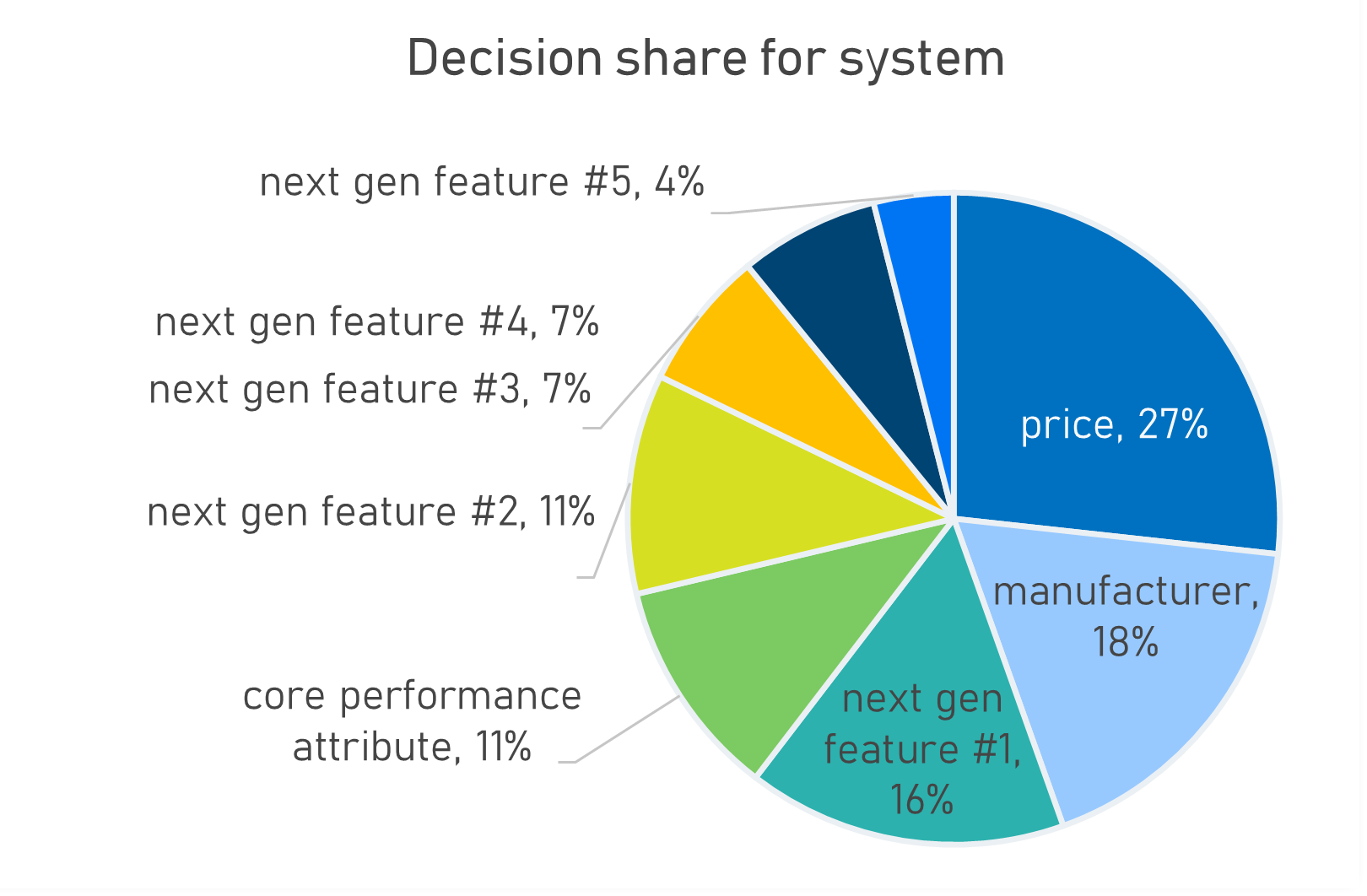
Insight #1: A small set of attributes explained over half of the decision for the capital system.
- Price, manufacturer, and core performance together drove over 50% of choice.
- Advanced features mattered but only after baseline expectations were met.
- Clear evidence of diminishing returns on certain “premium” upgrades the client was considering.
Why this mattered:
- Prevented the client from over-engineering the system and helped them prioritize investment where it pays off.
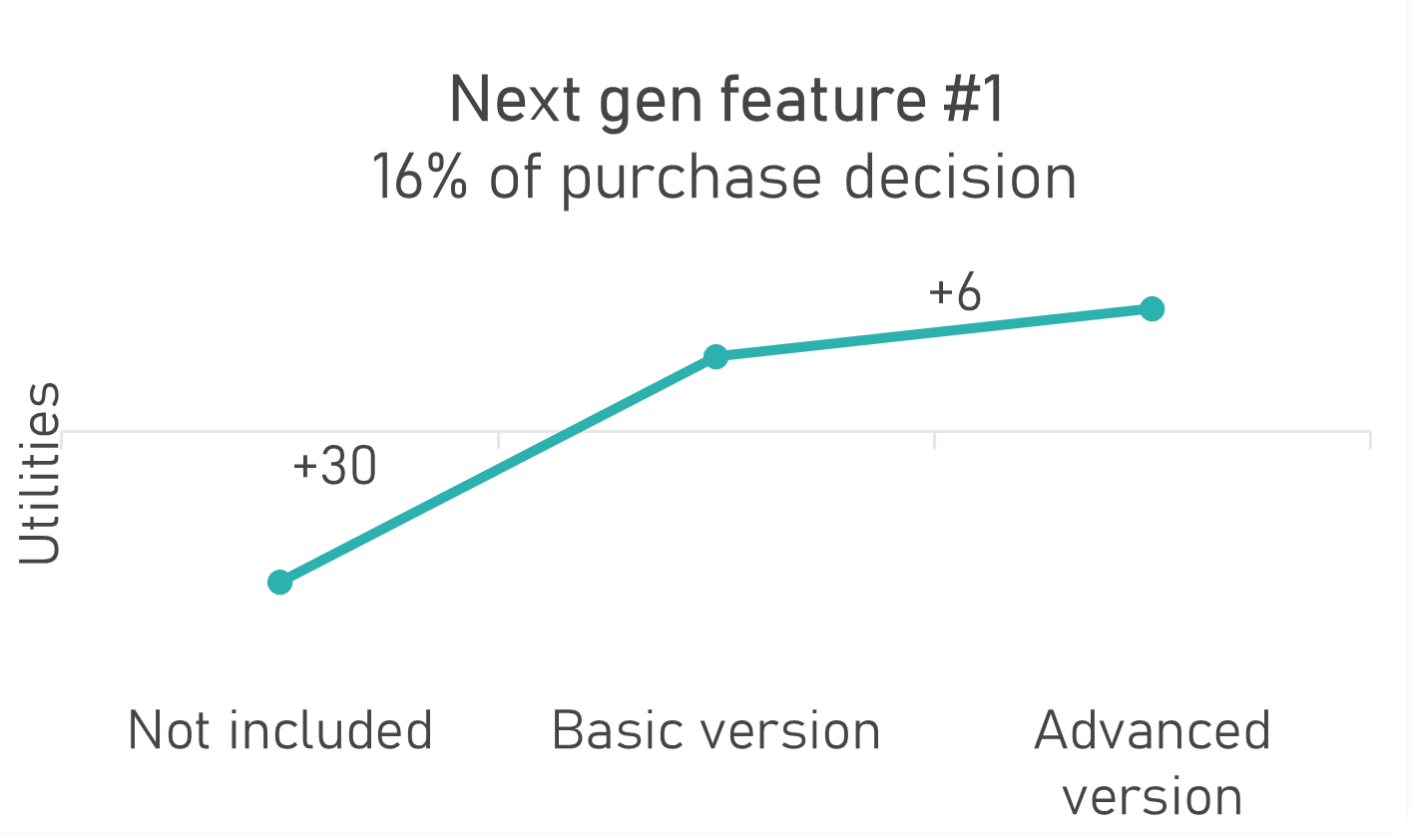
Insight #2: Higher performance levels were preferred, but gains flattened beyond a threshold for many features.
- Connectivity features were valued, but basic integration captured most of the benefit.
- Some planned next-gen features increased cost and complexity without moving demand.
- One feature emerged as a clear driver of willingness to pay – if delivered at a premium level

Why this mattered:
- Identified must-have vs. nice-to-have features, protecting margins and development budgets.
- Allowed the client to focus on innovation that would drive willingness to pay.
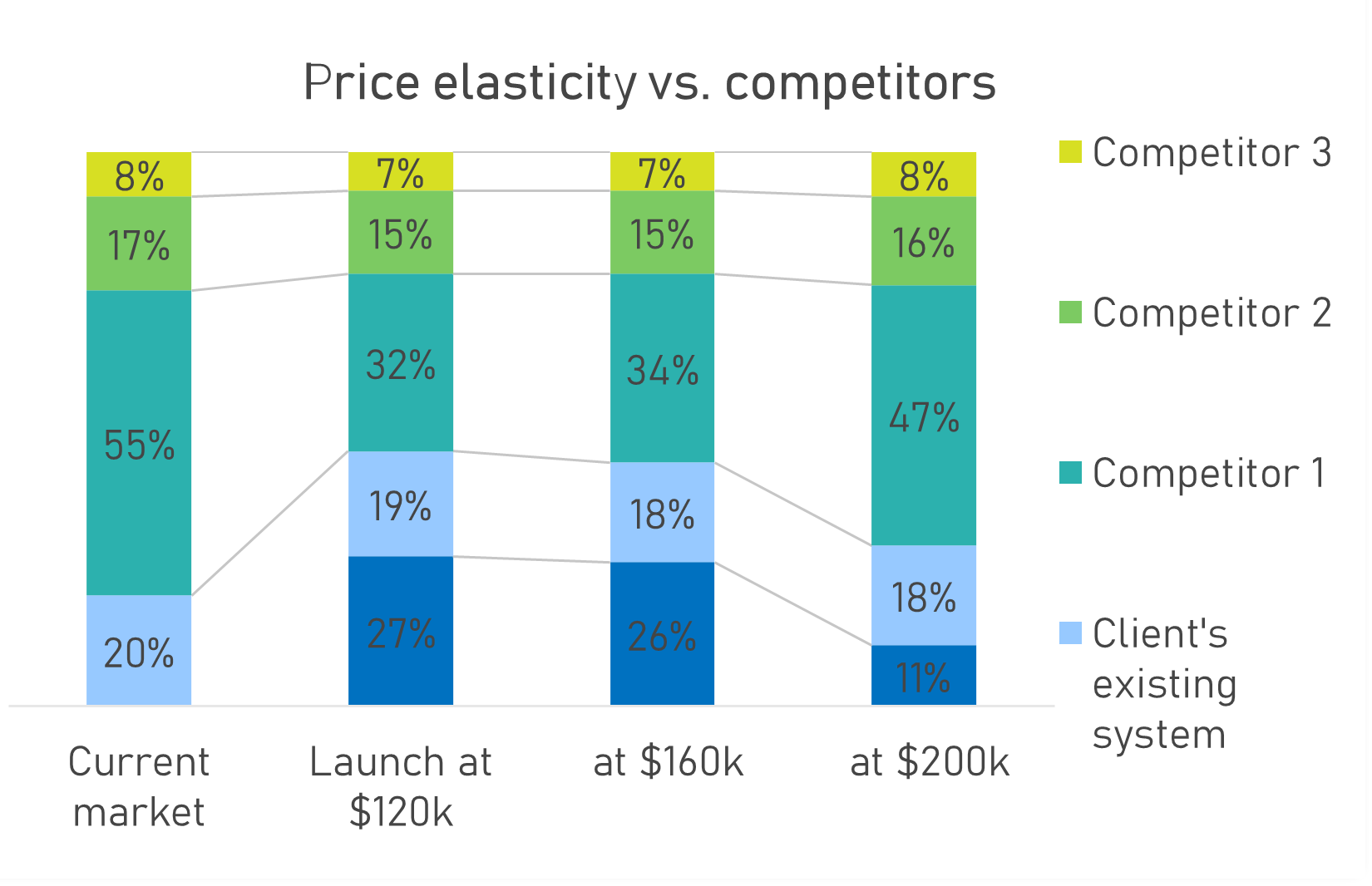
Insight #3: Demand for the next gen system significantly declines after price exceeds $160k.
- The next-gen system delivers net new share, with minimal cannibalization of the existing system.
- Share gains are driven largely by switching from the market leader (Competitor 1).
- $160k is the price ceiling without additional feature differentiation.
Why this mattered:
- Clear evidence of where price starts to hurt demand.
- Replaces gut-feel pricing with defensible price corridors backed by data.
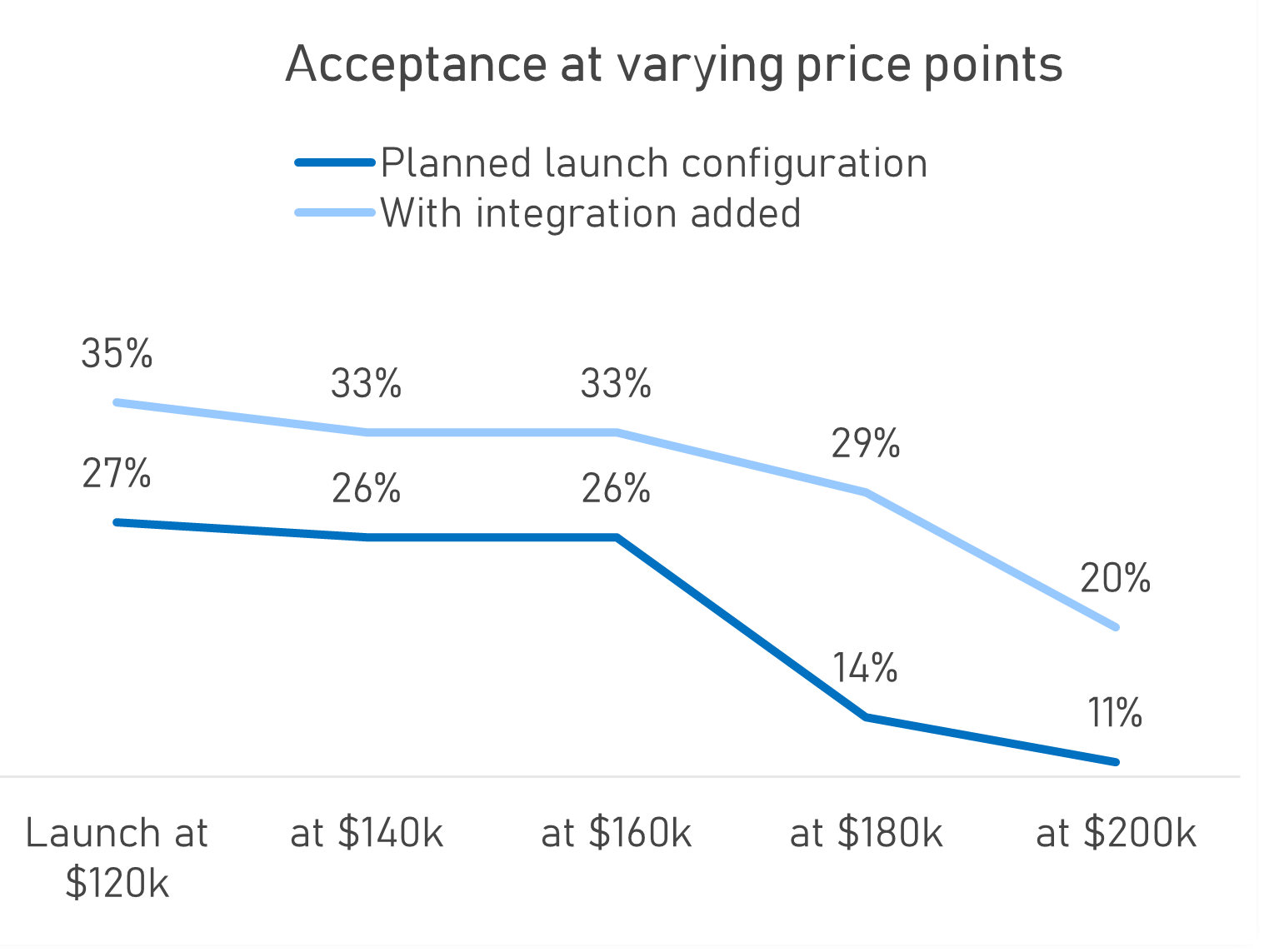
Insight #3: Adding integration could drive higher acceptance and justify a $180k price.
- With integration, demand remains resilient up to ~$180k- where the base configuration begins to drop sharply.
- Integration shifts the price–value curve, enabling a higher launch price without sacrificing share.
Why this mattered:
- Proved that integration wasn’t just a feature — it was a lever for pricing power.
- Gave the client clear evidence to raise the launch price while protecting share, turning a product decision into a margin opportunity.
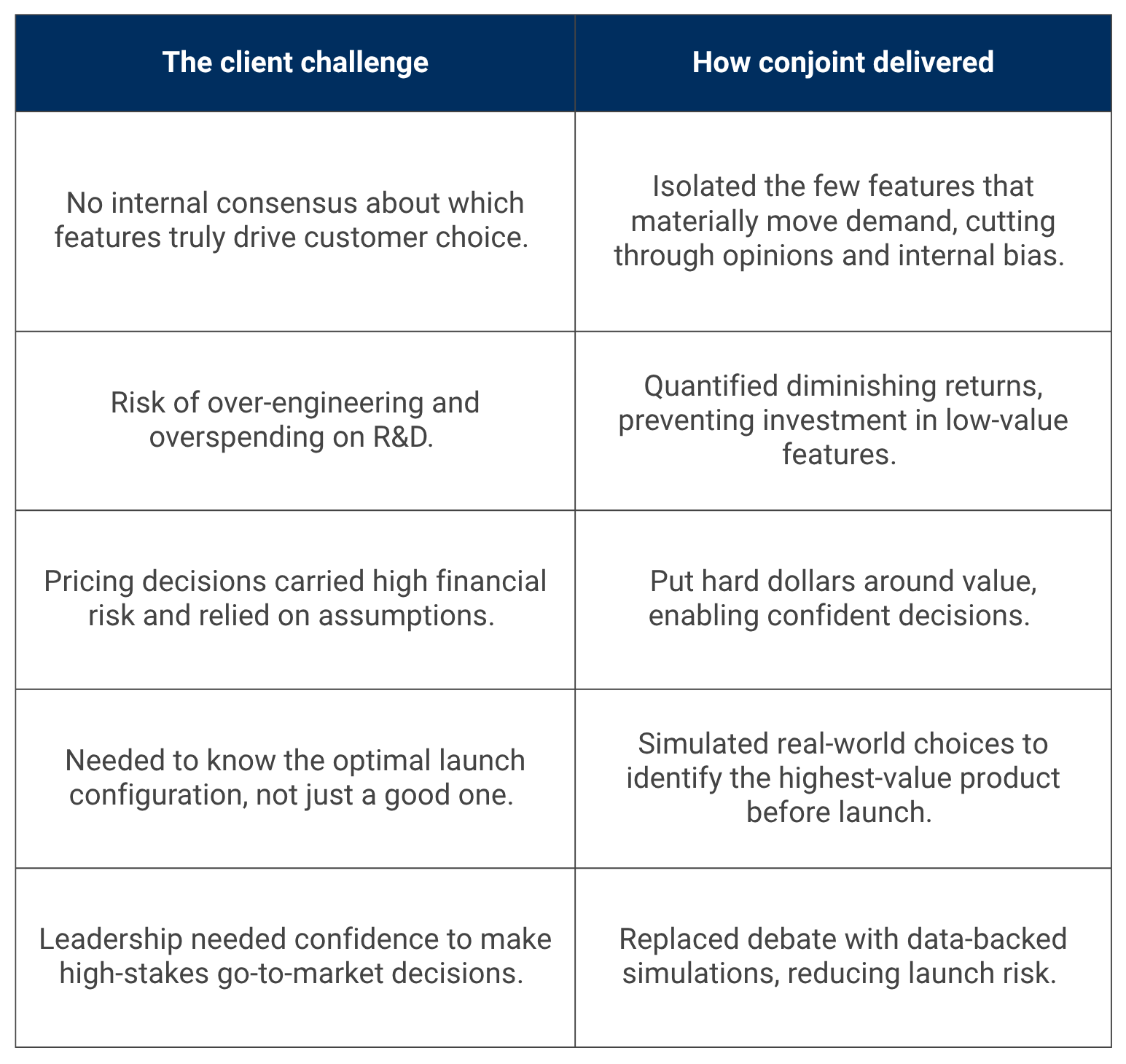
From internal debate to confident decisions:
Our approach to pricing consulting rests upon our team’s groundbreaking academic research and has been tested in the real world — where multi-million-dollar decisions are at stake and errors are irreversible. We apply our expertise to every pricing study we conduct, spanning a wide range of industries. Contact our team of expert consultants to learn more.
 Download the PDF